
Luxury Farmhouses.in blends market expertise with modern strategy to create premium estates and long-term wealth opportunities.
Luxury Farmhouses.in blends market expertise with modern strategy to create premium estates and long-term wealth opportunities.
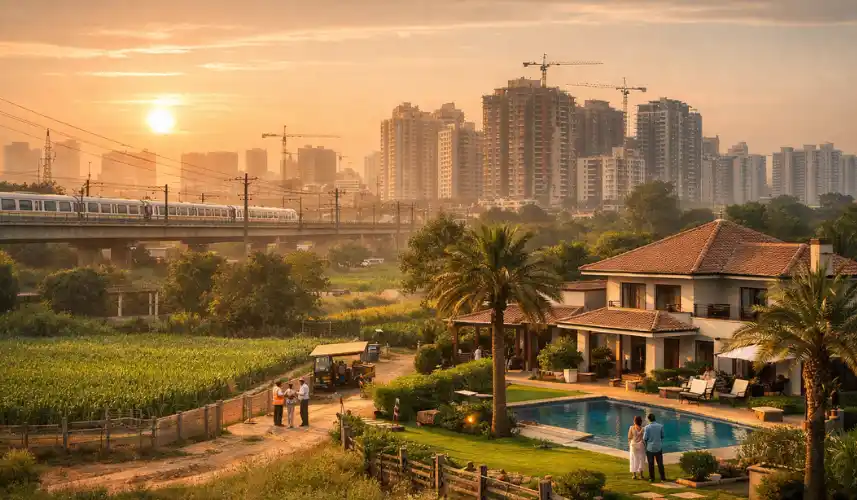
The farmhouse in Delhi has been linked to open areas, low population, and green environment. The land status and level of urbanization surrounding these properties has however altered greatly with the high rate of urban growth. These areas are critical to one attempting to make sense of how farmhouses can be incorporated into the planning scheme of the region in the current context.
The land usage of the farmhouses in Delhi is mainly controlled by land use policies by the planning officials. The majority of the farmhouses are constructed on the agricultural lands, which are supposed to be used in farming activities. In most regions, the residential use is limited although there are special conditions.
The zoning of farmhouses in Delhi (DLF Chhattarpur, Daffodil Lane, Ansals Satbari, Bandh Road Gadaipur, Radhey Mohan Drive, Sultanpur Farms, Forest Lane, MG Road, Club Drive, Ghittorni, Silver Oak, Shakuntala Farms, Ringh Drive, Dera Mandi, Osho Drive, Gadaipur, Mother Teresa, Vasant Kunj, Jonapur, Westend Greens, Rajokri, Bijwasan, and Kapseda) typically involves high plot size (in most cases, in acres and not in square yards). Construction standards limit coverage, height and structures that are allowed. With the continual conversion of the low-density residential or agricultural areas in Delhi, a huge number of farmhouse belts are classified in the low-density residential or agricultural segments that may not be converted to full residential colonies without a formal approval.
The agricultural land in Delhi is distinctly separated into residential and commercial areas depending on land use laws. Delhi is a more rigid place, whereas in some NCR areas, partial conversion of land-use is possible. Illegal building of or inappropriate use of farm land may result in punishment, blockage, or destruction.
Local development bodies and other authorities that oversee farmhouse areas constantly inspect the areas to ensure compliance. To prevent future conflicts, buyers and owners will have to confirm land titles, zoning, and building plans approval.
In Delhi, urbanization has been progressively implemented in traditional farmhouse areas. The accessibility and the value of land have been enhanced due to the development of the roads, metro and the residential developments in the area. Places that were deemed as isolated are now encircled by the urban structures.
Although this is growing, the farmhouse areas are specifically maintained low-density to manage congestion and maintain the green buffers. This gives another form of contrast in which there are urban facilities nearby but land use regulations prevent extensive development of farmhouse belts.
Flexibility in policies is one of the big variations. Delhi has less rigid development norms than the one in Delhi. This has brought about quick urbanization in Delhi farms houses and the farm houses in Delhi are more planned and classified as agricultural.
The agricultural preservation and urban growth are manifested in the land status of farmhouses in Delhi, wherein there is a delicate balance between urban growth and agricultural preservation. Although this has truly made infrastructure closer with the urbanization, the use of the properties remains strictly regulated through zoning and land use regulations. The legal and planning boundaries are important in ensuring one makes informed decisions. To the reader who wants to learn more about luxury farmhouse areas and the specifics of making plans, Luxury Farmhouses.in can be viewed as an informative resource that presents the area of development clearly and contextually.